

Published
July 21, 2026
by Joe Scerri, Owner
Choosing the right hardwood flooring is only part of the decision. Equally important is selecting the proper installation method. Two of the most common techniques are glue-down and nail-down installation, and while both produce beautiful, long-lasting floors, each is designed for different situations.
The best choice depends on the type of hardwood flooring you're installing, the subfloor beneath it, and the needs of your home. Understanding the differences can help ensure your new floor performs as expected for years to come.
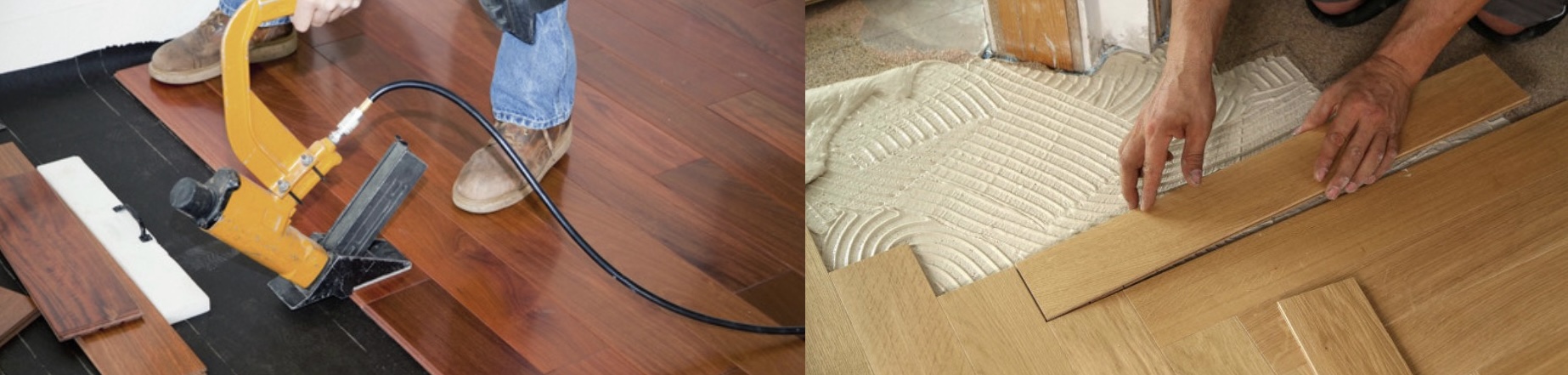
Glue-down installation involves securing each plank directly to the subfloor using a high-performance flooring adhesive. Once the adhesive cures, the flooring becomes firmly bonded to the surface below.
This method is most commonly used for engineered hardwood flooring, particularly when installing over concrete slabs with sound control or below-grade spaces where traditional nailing isn't possible.
Glue-down installations provide a solid feel underfoot and help reduce movement between planks when installed correctly.
Nail-down installation secures hardwood flooring by fastening each board to a plywood or wood subfloor using flooring nails or staples.
This has been the traditional installation method for solid hardwood flooring for generations and remains the preferred option for many wood-framed homes.
Because the flooring is mechanically fastened to the subfloor, nail-down installations offer excellent long-term stability while allowing the wood to naturally expand and contract with seasonal humidity changes.
Glue-down installation is often recommended when:
Modern flooring adhesives are engineered to provide exceptional bonding strength while helping absorb minor movement within the flooring system.
Nail-down installation is typically the preferred method when:
Because solid hardwood expands and contracts more than engineered flooring, mechanical fastening often provides the best long-term performance.
Yes. Many engineered hardwood products can be installed using either a glue-down or nail-down method.
The correct installation method depends on several factors, including:
Always follow the manufacturer's installation guidelines to maintain warranty coverage and ensure proper performance.
Advantages
Things to Consider
Advantages
Things to Consider
When installed correctly, both glue-down and nail-down hardwood floors can last for decades.
The most important factor is not which installation method is used, but whether the flooring is installed according to manufacturer specifications and the conditions of the home.
Proper moisture testing, subfloor preparation, acclimation, and professional installation all have a greater impact on the life of your floor than the fastening method alone.
There is no single installation method that is best for every project.
Glue-down installation is often the preferred solution for engineered hardwood over concrete, while nail-down installation remains the standard for solid hardwood over wood subfloors.
Every home is different, and the ideal installation method depends on your flooring product, your subfloor, and your home's construction. An experienced flooring professional can evaluate these factors and recommend the approach that will provide the best long-term results.
Whether you're installing solid hardwood or engineered flooring, selecting the proper installation method is just as important as choosing the wood itself. At Scerri Quality Wood Floors, we help homeowners throughout Manhattan and the surrounding area determine the best installation approach for their home, ensuring beautiful floors that are built to last. Contact us today to discuss your project or schedule a consultation.

© 2026 Scerri Quality Wood Floors


