


Published
October 14, 2026
by Joe Scerri, Owner
When installing glue-down flooring, choosing the right adhesive is only part of the process. The tool used to spread that adhesive is just as important.
Notched trowels may seem like simple installation tools, but their size, shape, and design play a critical role in how flooring materials bond to the subfloor.
Whether installing engineered hardwood, cork, rubber, or other glue-down flooring materials, using the correct trowel helps ensure proper adhesive coverage, reliable bonding, and long-term performance.
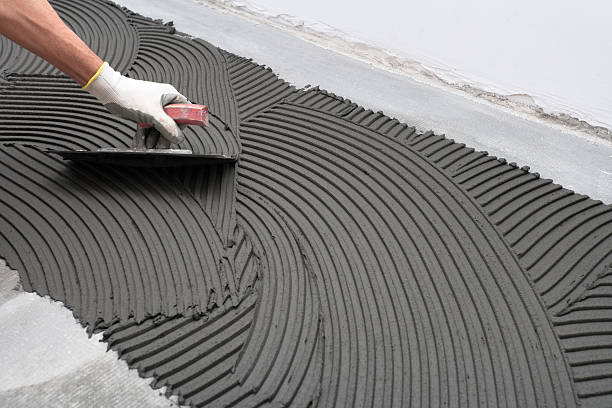
A notched trowel is a specialized tool used to spread adhesive evenly across a prepared subfloor.
Unlike a flat trowel, its edge contains precisely sized notches that create ridges of adhesive as the installer spreads the material.
These ridges help control how much adhesive is applied and how it is distributed beneath the flooring.
When the flooring is placed into the adhesive and properly seated, the ridges are intended to transfer and spread across the underside of the material, creating the coverage required by the adhesive manufacturer.
Notched trowels are manufactured with different notch widths, depths, shapes, and spacing.
These differences are not arbitrary. They determine the approximate amount of adhesive deposited on the subfloor and influence how effectively it transfers to the flooring.
For example, a smaller notch may be appropriate for certain thinner flooring materials, while a larger notch may be required for specific engineered hardwood products.
Using a trowel that is too small can result in insufficient adhesive coverage and a weakened bond.
Conversely, using an oversized notch may apply excessive adhesive, potentially causing unnecessary material consumption, adhesive squeeze-out, or other installation problems.
The correct trowel must always be selected according to the adhesive manufacturer's specifications and the flooring product being installed.
Not every flooring material has the same adhesive requirements.
Engineered Hardwood Flooring
Engineered hardwood is commonly installed using specialized wood flooring adhesives. The required trowel depends on factors such as plank dimensions, backing construction, adhesive formulation, and substrate conditions.
Proper adhesive transfer is essential for developing the intended bond and supporting the flooring throughout its service life.
Cork Flooring
Certain glue-down cork flooring products require carefully controlled adhesive application.
Depending on the product and adhesive system, the manufacturer may specify a fine-notched trowel, roller application, or another method.
Excessive or insufficient adhesive can affect the installation, making it important to follow the exact product instructions.
Rubber Flooring
Rubber flooring also requires adhesive application suited to the specific product.
The appropriate trowel may vary depending on material thickness, backing, substrate, and adhesive chemistry.
Using the wrong application method can contribute to bonding problems or visible irregularities in the finished surface.
The key takeaway is that there is no universal notched trowel suitable for every flooring material.

A freshly spread adhesive bed may look consistent from above, but appearance alone does not confirm that the correct amount of adhesive has been applied.
The real test is whether the adhesive achieves the transfer and coverage required by the manufacturer.
Installers may need to lift a newly placed board or flooring section to inspect the adhesive transfer.
If the adhesive is not making sufficient contact with the flooring, adjustments may be necessary.
This can involve correcting the trowel size, application technique, working time, or substrate conditions.
Following the manufacturer's coverage requirements helps reduce the risk of installation failures.
Even when an installer begins with the correct trowel, the tool's condition matters.
Over time, repeated contact with abrasive subfloors can wear down the notches.
As the notches become smaller, the trowel may deposit less adhesive than intended.
This can lead to inconsistent application and reduced coverage, even when the installer is using the originally specified tool.
Professional installers should inspect their trowels regularly and replace them when excessive wear affects their dimensions.
The correct notched trowel cannot compensate for an improperly prepared subfloor.
Before adhesive installation begins, the substrate must meet the flooring and adhesive manufacturers' requirements for cleanliness, dryness, flatness, and overall condition.
Excessive moisture, contamination, uneven surfaces, or unsuitable substrate materials can interfere with proper bonding.
Trowel selection must therefore be considered alongside moisture testing, surface preparation, and the adhesive manufacturer's installation instructions.
Every part of the process contributes to the performance of the finished floor.
Successful flooring installation depends on more than the quality of the visible material.
The adhesive, subfloor preparation, application tools, and installation techniques all work together to create a reliable finished product.
A notched trowel may seem like a minor detail, but using the wrong one can compromise an otherwise carefully planned installation.
At Scerri Quality Wood Floors, we understand that long-lasting hardwood flooring begins with proper preparation and attention to detail.
Serving Manhattan and Westchester since 1984, our team emphasizes appropriate installation methods, quality materials, and careful workmanship to help deliver floors designed for lasting performance.

© 2026 Scerri Quality Wood Floors


