

Published
October 26, 2026
by Joe Scerri, Owner
When selecting hardwood flooring, homeowners often focus on wood species, color, plank width, and finish.
However, one of the most influential factors in determining the appearance of a hardwood floor is how the lumber is cut from the log.
Plain-sawn, quarter-sawn, and rift-sawn oak each produce distinct grain patterns and characteristics that can dramatically change the appearance of a finished floor.
Understanding these differences can help homeowners, architects, and designers select flooring that complements their space while meeting their expectations for performance and aesthetics.
The cutting method, often referred to as the sawing method, describes how a log is broken down into individual boards.
The orientation of the wood's annual growth rings relative to the board's face influences the grain pattern, dimensional movement, and amount of usable lumber produced.
Even when boards come from the same oak species, different cutting methods can create noticeably different appearances.
The three most commonly discussed grain classifications are plain-sawn, quarter-sawn, and rift-sawn.
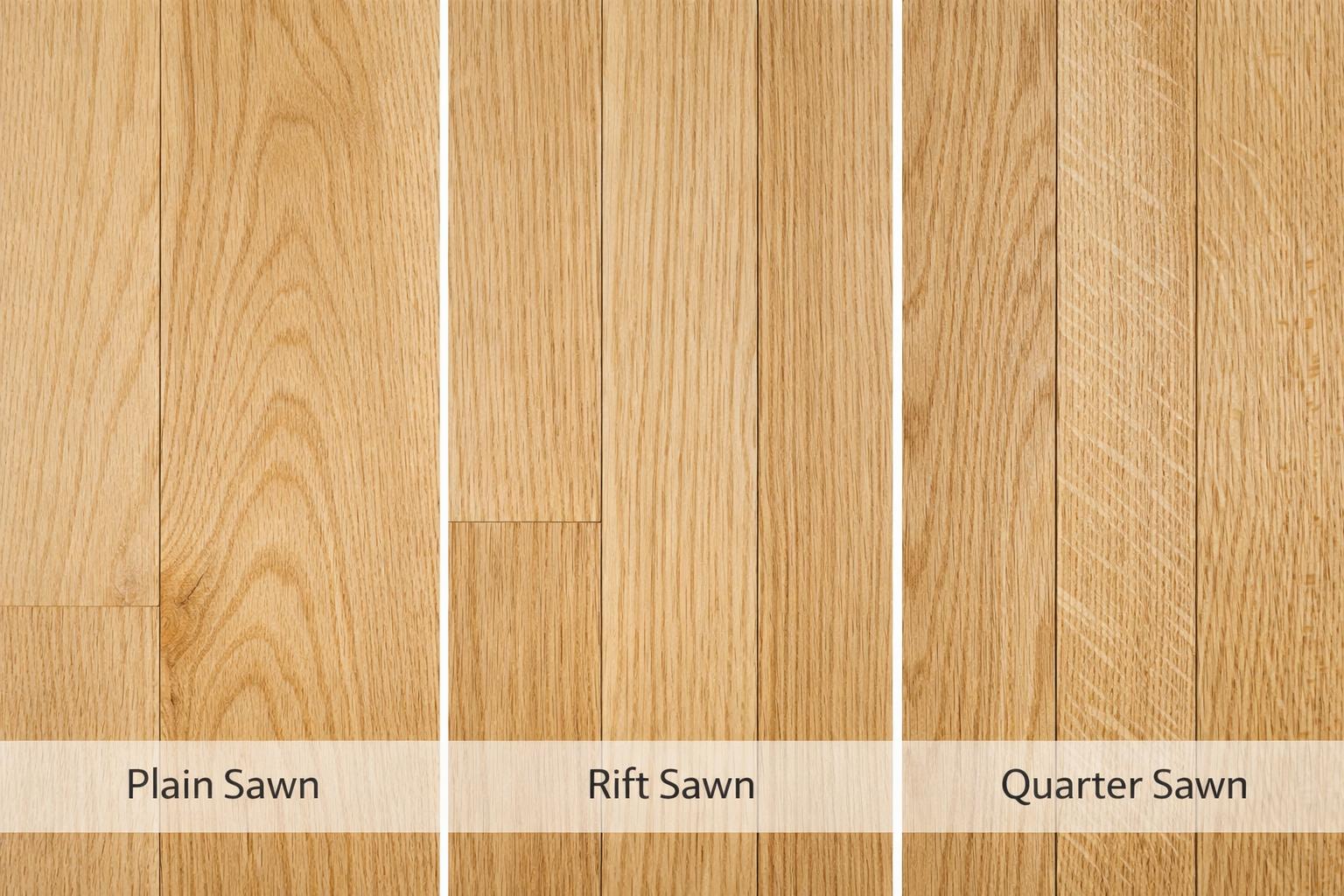
Plain-sawn oak, sometimes called flat-sawn oak, is the most common and generally the most economical of the three options.
In plain-sawn boards, the annual growth rings typically intersect the board's face at angles ranging from approximately 0 to 30 degrees.
This orientation produces the familiar cathedral-shaped grain patterns commonly associated with traditional oak flooring.
Plain-sawn oak typically displays greater visual variation from board to board, with sweeping grain patterns and natural movement throughout the floor.
Its character makes it particularly suitable for homeowners who appreciate the organic appearance of natural wood.
Plain-sawn lumber generally provides an efficient yield from the log, contributing to its wider availability and relatively accessible pricing.
However, its growth-ring orientation can make it more susceptible to changes in board width as moisture conditions fluctuate.
Proper acclimation, moisture management, and installation remain essential to its long-term performance.
Quarter-sawn oak is produced from lumber with annual growth rings oriented approximately 60 to 90 degrees relative to the board's face.
This orientation creates a straighter, more consistent grain appearance compared with plain-sawn oak.
One of the most recognizable characteristics of quarter-sawn white oak is its medullary ray fleck.
These distinctive markings appear as reflective ribbons or flakes across the wood's surface and are a natural feature of the oak's internal structure.
Quarter-sawn oak is often selected for traditional interiors, historic restorations, and projects where its unique grain character is desired.
Beyond appearance, quarter-sawn boards generally experience less dimensional movement across their width than plain-sawn boards under comparable moisture changes.
This makes quarter-sawn oak an appealing option for projects where both visual consistency and dimensional stability are important.
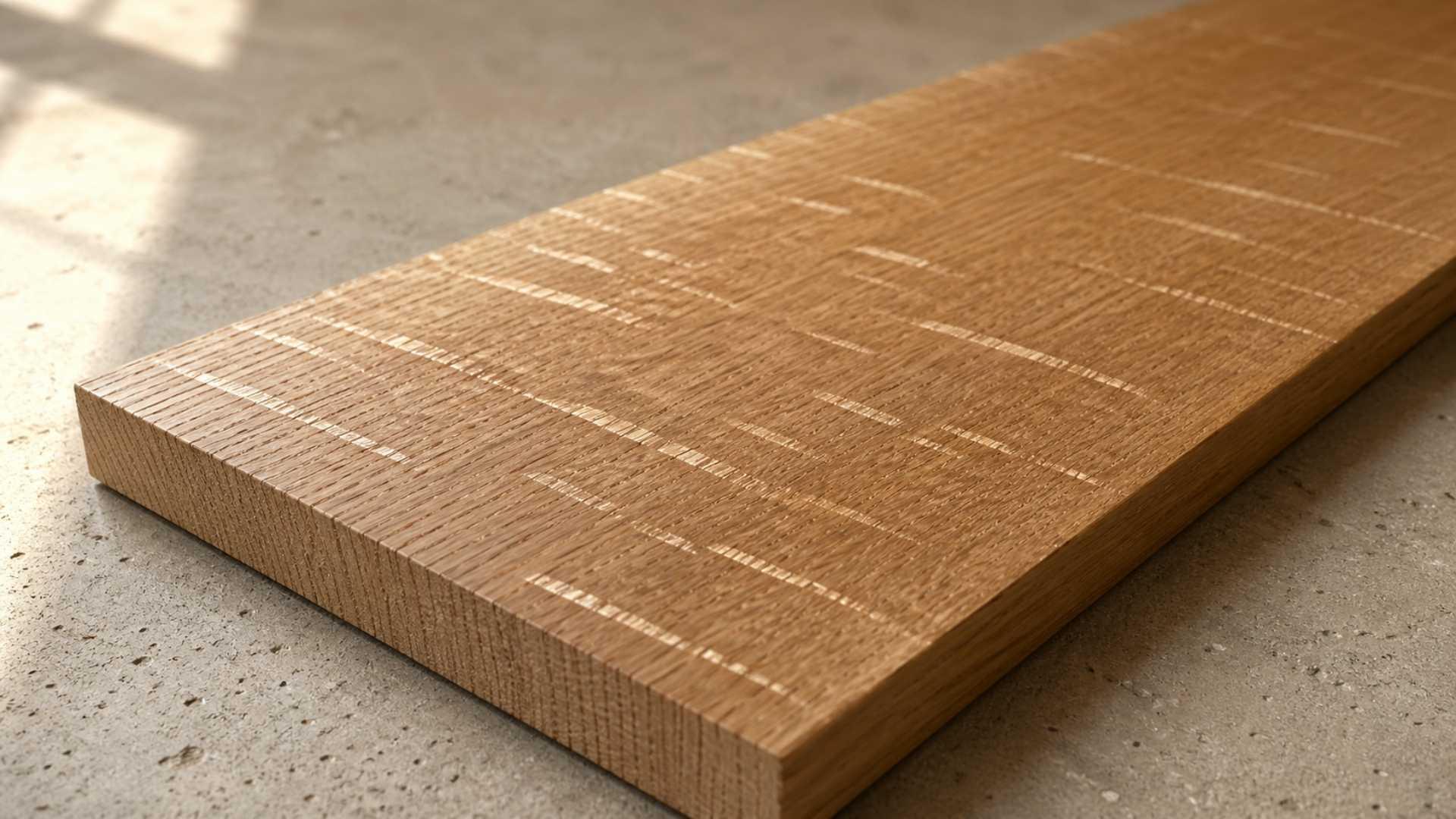
Rift-sawn oak is valued for its exceptionally straight, consistent grain pattern.
Rift grain generally occurs when annual growth rings intersect the board's face at approximately 30 to 60 degrees.
Unlike plain-sawn oak, which often displays prominent cathedral patterns, rift-sawn oak produces a more linear appearance.
It also typically displays less prominent ray fleck than quarter-sawn oak.
This restrained grain character makes rift-sawn white oak especially popular in contemporary interiors, minimalist spaces, and luxury residential projects.
Achieving a consistent rift grain can require more selective cutting and sorting, often resulting in lower yields and higher material costs.
For homeowners seeking a refined, uniform appearance across large flooring areas, rift-sawn oak can be an excellent choice.
Plain-Sawn Oak
Quarter-Sawn Oak
Rift-Sawn Oak
Although these characteristics are useful guidelines, the exact appearance of any floor depends on the species, grading, board selection, and manufacturing process.

Many premium hardwood flooring products are offered as rift and quartered white oak.
Rather than consisting exclusively of one grain classification, these products combine boards exhibiting rift and quarter-sawn characteristics.
The result is a floor with predominantly straight grain, controlled visual variation, and occasional medullary ray fleck.
This combination is particularly popular in high-end residential projects where homeowners want a sophisticated appearance without the pronounced cathedral patterns associated with plain-sawn oak.
However, rift and quartered flooring should not be confused with exclusively rift-sawn flooring.
The amount of ray fleck and variation can differ depending on the manufacturer's grading standards and material selection.
Reviewing representative samples is essential before choosing a product.
There is no single cutting method that is best for every hardwood flooring project.
Plain-sawn oak offers natural character and a traditional wood appearance.
Quarter-sawn oak provides distinctive grain details and favorable dimensional stability.
Rift-sawn oak delivers a cleaner, more uniform aesthetic that is particularly well suited to contemporary interiors.
Budget, design preferences, plank dimensions, and installation conditions should all be considered when comparing these options.
It's also important to remember that the cutting method is only one component of flooring quality.
Wood species, moisture content, construction, finish, and installation practices all contribute to the performance and longevity of a hardwood floor.
Understanding the differences between plain-sawn, quarter-sawn, and rift-sawn oak allows homeowners to make more informed decisions about the appearance and performance of their flooring.
At Scerri Quality Wood Floors, we help homeowners, architects, and designers evaluate premium hardwood flooring options for projects throughout Manhattan and Westchester County.
Whether you're considering traditional plain-sawn oak, distinctive quarter-sawn flooring, or the refined appearance of rift-sawn white oak, selecting the right material begins with understanding its characteristics.
Contact Scerri Quality Wood Floors to explore hardwood flooring options for your next renovation or installation project.

© 2026 Scerri Quality Wood Floors


