


Published
October 25, 2026
by Joe Scerri, Owner
When selecting engineered hardwood flooring, homeowners often focus on wood species, color, plank width, and finish.
While these are important considerations, one of the most significant factors in determining the quality and long-term potential of an engineered hardwood floor is its wear layer.
Understanding how wear layers work can help homeowners make more informed decisions when comparing flooring products, particularly when investing in premium hardwood flooring.
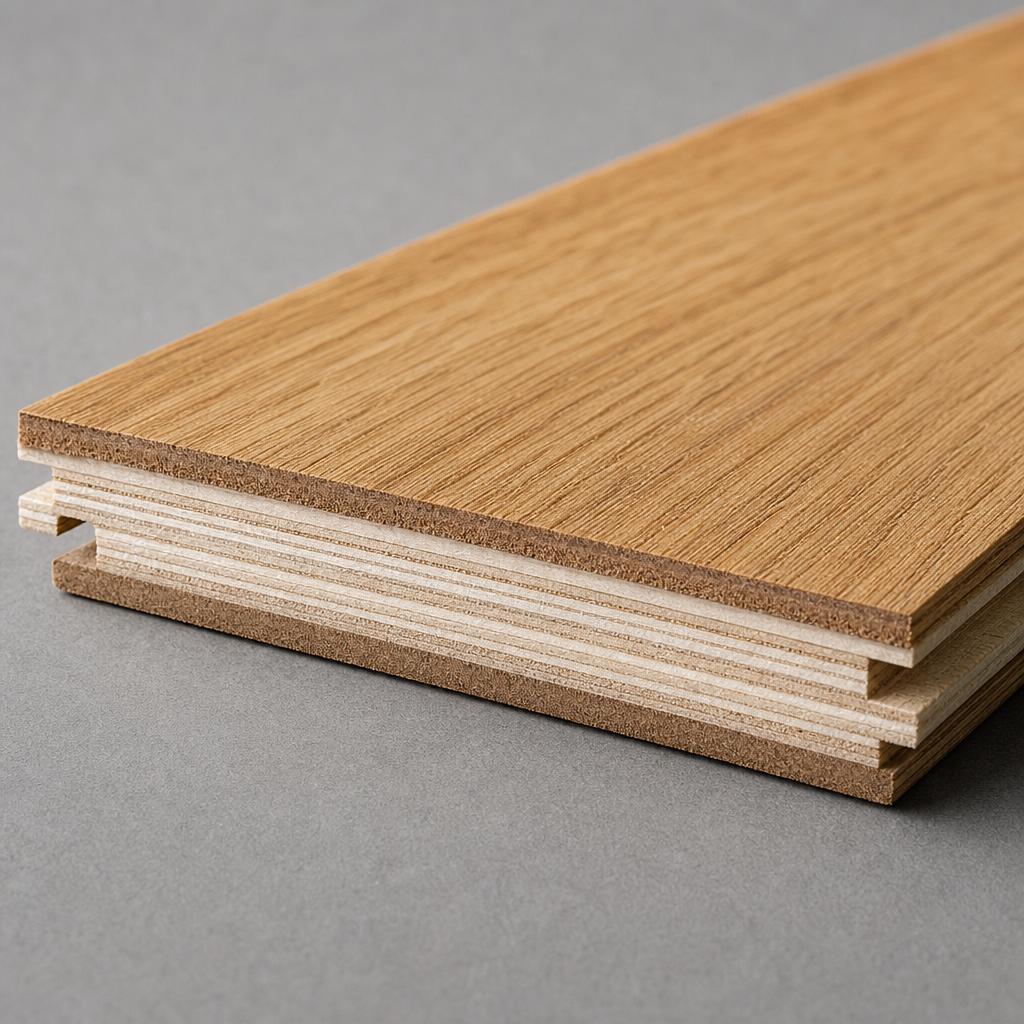
Engineered hardwood flooring is constructed using multiple layers of material, with a genuine hardwood surface bonded to a supporting core.
This top layer of real wood is commonly referred to as the wear layer, or hardwood veneer.
Unlike laminate flooring, which uses a printed decorative surface, engineered hardwood features genuine wood, providing the natural grain, texture, and character associated with traditional hardwood flooring.
The thickness of this hardwood layer varies significantly between manufacturers and product collections.
Some engineered floors feature thin veneers, while premium products may incorporate substantially thicker hardwood layers designed to offer greater long-term flexibility.
Wear layer thickness is typically measured in millimeters, with different thicknesses offering different characteristics.
1–2 mm Wear Layers
Thinner wear layers are commonly found in certain entry-level and specialty engineered flooring products.
While these products can provide the appearance of genuine hardwood, their limited surface thickness generally restricts the potential for future sanding and refinishing.
3–4 mm Wear Layers
Engineered flooring with a 3–4 mm wear layer is often found in higher-quality residential products.
Depending on the flooring's construction, installation, and condition, these floors may accommodate future refinishing.
5–6 mm Wear Layers
Thicker wear layers are available in some premium engineered hardwood flooring collections.
These products provide more genuine hardwood above the supporting core and may offer greater flexibility for future sanding and refinishing.
However, wear layer thickness alone does not determine how many times a floor can be refinished.
The manufacturer's specifications, flooring construction, and amount of material that can safely be removed must all be considered.
A common misconception is that a thicker wear layer automatically makes engineered hardwood more resistant to scratches, dents, and everyday wear.
In reality, surface durability depends on several factors, including the hardness of the wood species, the finish applied, and how the flooring is maintained.
A thicker wear layer does not necessarily prevent surface damage.
Instead, its primary advantage is providing additional genuine hardwood material that may allow the floor to be renewed in the future.
For example, a floor with a thinner veneer and a high-quality factory finish may perform very well under normal residential conditions.
Meanwhile, a thicker wear layer may provide greater long-term restoration potential without necessarily being more scratch-resistant.
One of the primary benefits of genuine hardwood flooring is the possibility of restoring its appearance after years of use.
With engineered hardwood, refinishing potential is directly influenced by the thickness of the hardwood surface.
Sanding removes a portion of the top layer, making it essential that sufficient material remains above the engineered core.
Some engineered hardwood products are not designed to be sanded, while others may accommodate one or more refinishing procedures.
The number of possible refinishing cycles cannot be determined by thickness alone.
Factory-applied finishes, textured surfaces, bevels, and the overall condition of the floor can also affect whether refinishing is appropriate.
Homeowners should always review the manufacturer's recommendations before attempting to sand an engineered hardwood floor.
Although wear layer thickness is important, it should never be the only factor considered when evaluating engineered hardwood flooring.
The quality and construction of the supporting core play a major role in the product's overall performance.
Engineered hardwood flooring may feature multi-ply plywood, high-density fiberboard, or other specialized core constructions.
Each construction has its own performance characteristics and installation requirements.
Manufacturing precision, adhesive quality, moisture management, and proper installation are equally important considerations.
A well-manufactured engineered hardwood floor with an appropriately selected wear layer may perform better than a thicker product with inferior construction.

The ideal wear layer depends on the application, expectations, and long-term plans for the flooring.
For homeowners planning to remain in a property for many years, an engineered floor with greater refinishing potential may be a worthwhile investment.
For other projects, a thinner wear layer may be appropriate when the flooring meets the necessary performance requirements and future sanding is not a priority.
In Manhattan apartments, Westchester residences, and other high-end residential environments, selecting the right engineered hardwood flooring requires balancing appearance, construction quality, installation conditions, and long-term maintenance.
Rather than focusing exclusively on a particular thickness, homeowners should evaluate the complete flooring system and understand what each product is designed to deliver.
Wear layer thickness is an important specification, but it represents only one component of a quality engineered hardwood floor.
Understanding how the hardwood surface interacts with the core construction, finish, and installation method allows homeowners to compare products with greater confidence.
At Scerri Quality Wood Floors, we help homeowners, designers, and contractors evaluate hardwood flooring options based on the specific requirements of their projects.
From premium engineered hardwood flooring to custom solid wood installations, our focus is on selecting materials that provide the right combination of appearance, performance, and long-term value.

© 2026 Scerri Quality Wood Floors


